

Learning to Queue on a Mountaintop
A reflection on ice cream, mountaintops, Freddie Mercury and the simple life.

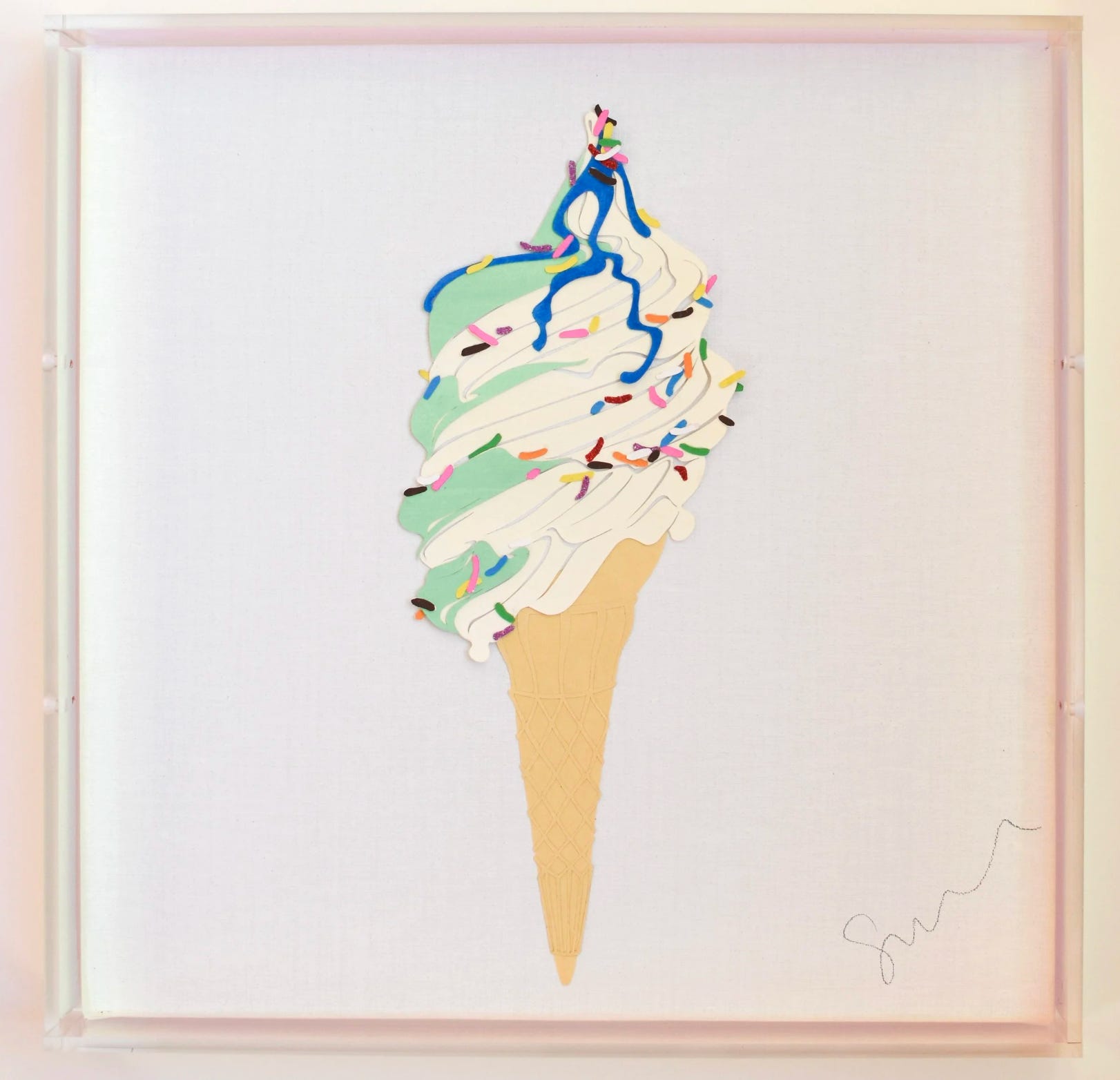
Soft serve by Suze Riley
The man has his arm plunged deep into a wooden barrel that rises from the ground to his chest.
He scoops. In my memory I can’t see his face, but his hair is jet black, shiny with coconut oil.
He is the local ice-cream man. We are at the top of a ghat - top of a mountain pass in Panchgani, Maharashtra, India. It’s a place the British army would come to escape the heat during the days of the empire. It’s now a place of boarding schools and honeymooning couples. Thirty years before I arrived, Freddie Mercury was walking the same dusty road, his former boarding school is close to mine and it’s on this mountaintop that he formed his first band. The kids from his former boarding school are unruly, noisy and well, fun. Our school is quieter, stricter. We walk those roads in double file, holding hands, singing quietly.
I’m ten years old.
I’m ethnically Indian, but I’ve never lived here before.
I’m from New Zealand, but I’m trying to lose my accent. I can’t survive this school with my accent - no one understands me.
The ice-cream man has a moustache, like the type you’ll see on handsome men in East London these days. He’s wearing a worn blue shirt, his eyes are focused on the work ahead of him; a queue of girls snakes out from the terrace into the dorm corridors, the Madam overseeing the line gossips with another teacher. We’re fizzing with anticipation, life has been reduced to a scoop.
From the top of this mountain, you can see Table Mountain and endless sky. When we walk to school, we walk through the clouds. Today there are none. Just two wooden barrels with all the treasures of the world: pistachio and chocolate ice cream.

Table Mountain, Maharastra.
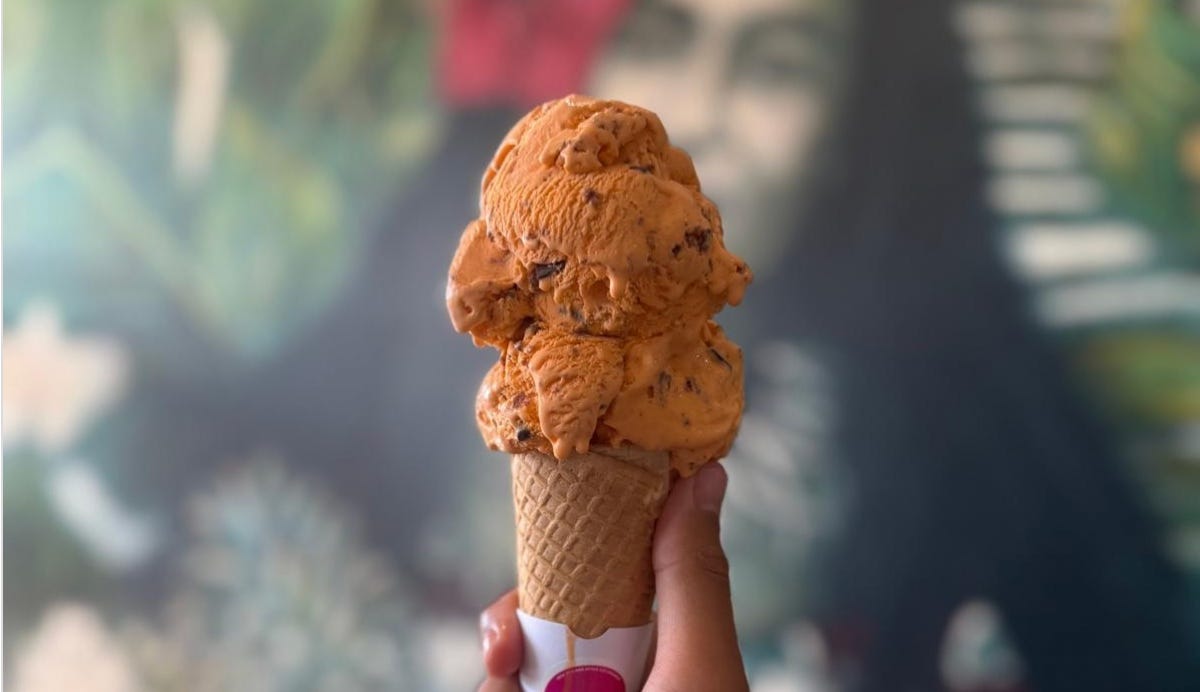
I never choose pistachio. My favourite ice cream in New Zealand is orange chocolate chip or hokey pokey ice cream. Pistachio feels foreign, adult, like something my mum would get. Mum is miles and miles away in London, and only now, looking back, do I realise how hard it must have been for her to leave us on this mountaintop in India.
She was always in tears when we left; it was my dad’s decision. He wanted his Kiwi kids to understand what it meant to be Indian.
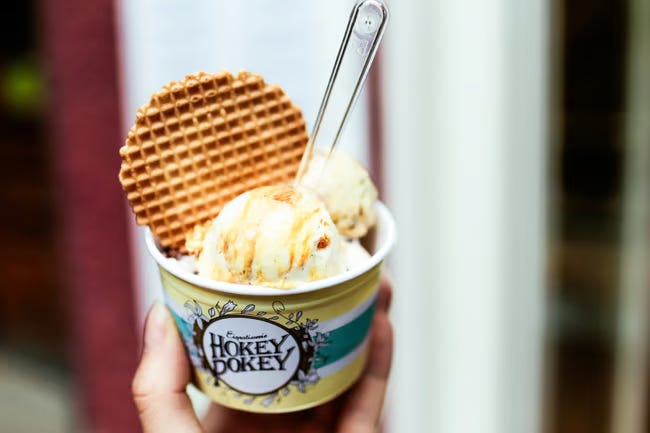
And so here I am, queuing for ice cream, learning how to be Indian, apparently. Later on, as a teenager in Britain, I learnt the art of queuing but waiting for ice cream on a mountaintop, is where I learnt to be patient.
I tug at my uniform: a red-and-white gingham kurta: a flowing soft cotton outfit. This is my third outfit of the day - we have an outfit for every section of the day. We wake before six am. We exercise. Do homework. Have breakfast. Head to school. Then lunch, and a nap, then more school and rest and play. Every moment of the day is accounted for and scheduled. Including this ice cream queue on a mountaintop.
I study the kids with fascination, they speak English but the lilt, the gestures are different. They sprinkle Hindi and Marathi in their chatter. I have to change fast. My efforts pay off. Soon, I have a best friend. She wears her hair in long plaits like me. She’s the smartest girl in my class. We will go on to share a bunk bed. She’s my local guide in this foreign place. She later tells me that she befriended me because she thought I seemed exciting and foreign.
She sings Bollywood songs to me, I teach her all about Kylie Minogue and sing pop songs loudly from my metal bunk bed. Without her, I wouldn’t have known how to navigate life in an Indian boarding school.
As an adult, I prefer to be in company than alone, and I sometimes wonder if the experience of boarding school and moving around in early childhood means I seek safety in company. I triangulate my life on friendships - my friends have always been my anchor point.
We wait for an hour in that ice-cream queue. Maybe longer. The queue is a place for anticipation, gossip, and friendship. My best friend and I watch every girl ahead of us receive her scoop and skip away with their ball of sugar—and we calculate how much closer we are to our turn.
When I tell my younger sister this story now, she thinks it sounds like deprivation. An hour-long queue. Ice cream once every few months.
I wonder: was I deprived? Or lucky?
Boarding school was difficult for many reasons, it forced me to change a fundamental part of who I was to fit in. I had to shift my accent and be someone different to fit in with the kids of Indian factory owners, kids who had peacocks running on their lawn, who lived in parts of India I had never heard and grew up in a culture I didn’t fully understand.
But queuing on a mountaintop for ice-cream with two hundred girls? That was pure joy. I remember anticipation and a sense of freedom out in the open air, amongst tall silver oak trees. I remember friendship.
From time to time I think about that ice-cream man, that queue, it’s a snapshot of a simpler time in my life, when life was reduced to a simple activity.
Today I notice my happiest moments are from the smallest things: it’s the scratch of my favourite pen in my moleskin journal, the moment I pull on my favourite socks, waiting for my coffee to brew in my moka pot, a good conversation with a friend or precious moments I have in the morning with my hand on my girlfriend’s back. Sometimes I’ll take myself out for (chocolate) ice cream, just me and a scoop, sometimes in the middle of the day, a few moments alone and it’s always precious.
Perhaps, then, life reduced to small moments has always been where the magic is.
Until next time,
Parul.
I love this part: "My best friend and I watch every girl ahead of us receive her scoop—and skip away with their ball of sugar—and we calculate how much closer we are to our turn." It reminds me of Ode on a Grecian Urn, with the two lovers always in delicious pursuit, never getting the treasure of each other. But here, the essay goes beyond the apparent anticipated treasure, the ice cream; the writing turns ice cream into the portal, or the form, for friendship, which doesn't need anticipation to be beautiful and true. The last paragraph of touches—pen to paper, sock to foot, coffee to water, and most of all hand to girlfriend's back—gives us our turn to have the treasure, and be it. The living is beautiful, the use of the barrel is its truth, we are meant to taste and love. Thank you so much for writing and sharing this.
This is divine. I saw Eleanor’s restack and knew I’d love your writing. Reading this, you reduced my life to one splendid scoop. :)